

For buyers who want something that represents a brand, a club, or a milestone, the difference is rarely subtle. It shows up in weight, shine, edge quality, and how the pin holds up after months of use.
What do luxury custom lapel pins look and feel like in hand?
Luxury custom lapel pins typically feel denser, more balanced, and more precise than entry-level pins. Their lines look crisp, their fills sit evenly, and their surface finish reflects light smoothly instead of patchily.
They often have tighter tolerances: cleaner borders, more consistent enamel height, and fewer micro-defects. When someone runs a finger over the face, it usually feels deliberate, not rough or uneven.
Which base metals and plating options signal a premium pin?
Premium pins often start with higher-quality brass, iron, or zinc alloy depending on the design, then rely on better plating control. Luxury custom lapel pins commonly use polished gold, nickel, black nickel, copper, or even specialty finishes applied with consistent thickness.
The giveaway is consistency. Cheaper plating can look dull, thin, or uneven around corners and recessed areas. Premium plating tends to keep its tone, resist tarnish better, and maintain a uniform shine across the entire face.
How does enamel quality separate luxury custom lapel pins from basic ones?
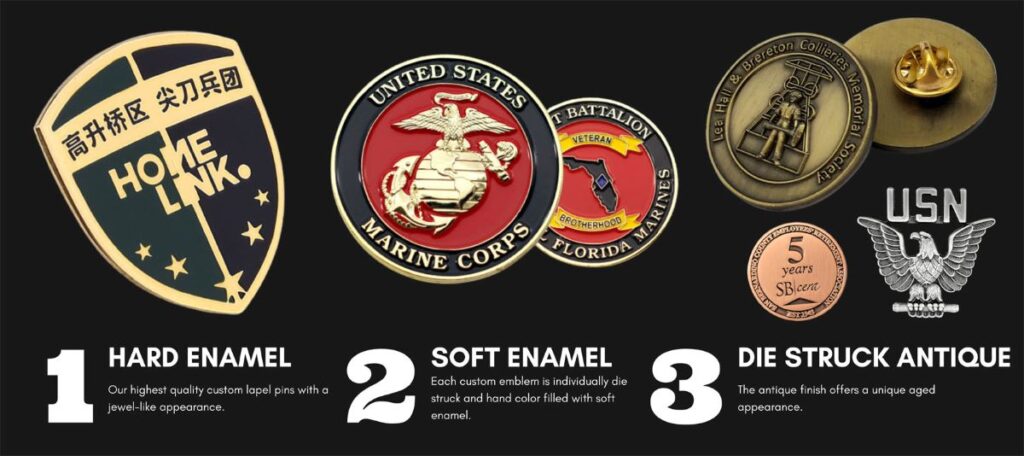
Enamel is where many pins either look high-end or immediately feel disposable. Luxury custom lapel pins usually use higher-grade soft enamel with clean separations or hard enamel with a smooth, level surface that feels like glass.
Basic pins often show color bleed, uneven fills, or pitting. Premium production keeps colors rich and stable, with better color matching and tighter control over curing, which reduces tiny surface flaws that cheap pins tend to collect.
Why do edges, lines, and die-striking matter so much?
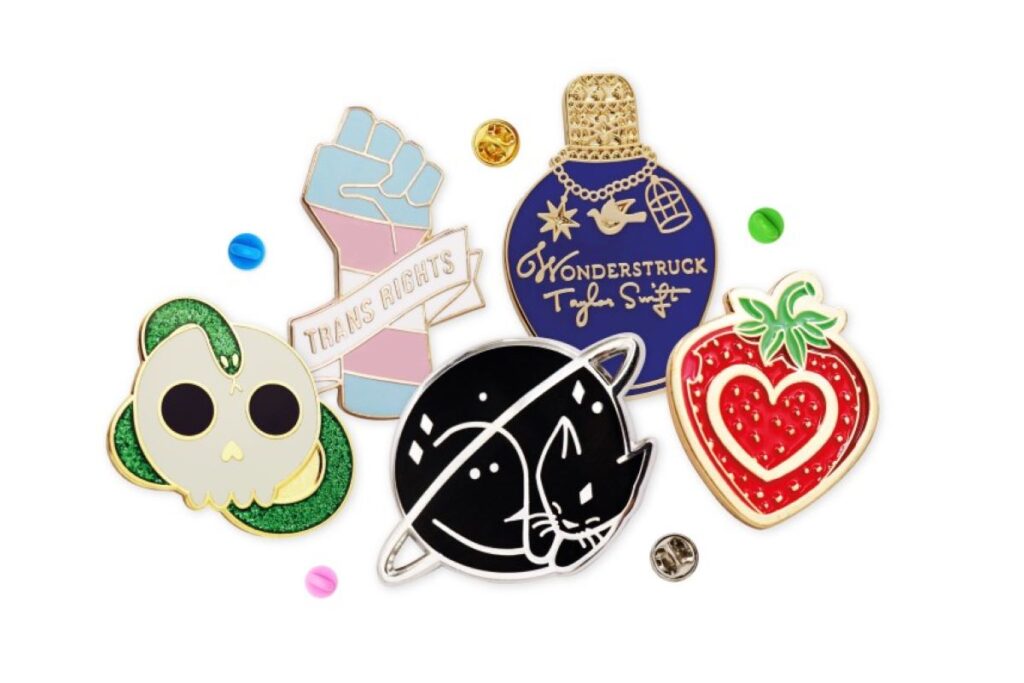
The mold and strike quality decide whether artwork looks sharp or “mushy.” Luxury custom lapel pins typically feature cleaner linework, sharper corners, and better-raised metal borders that make the design readable at a glance.
Basic pins can lose definition, especially in small text, thin outlines, and fine icon details. A premium pin holds those details because the die is cut and maintained to a higher standard, and the strike is more consistent across batches.
What role do polish and surface finishing play in perceived value?
Finishing is one of the easiest ways to spot quality. Luxury custom lapel pins usually receive more thorough polishing, resulting in mirror-like metal, smoother high points, and fewer swirl marks.
Lower-tier pins can look fine from a distance but show haze, scratches, or uneven shine up close. Premium finishing also improves contrast between metal and enamel, which makes the design “pop” in person and in close-up photography. Discover 10 custom promotional products that customers are more likely to keep and use.
How can special features turn a good pin into a premium one?
Special features elevate the product when they are executed cleanly. Luxury custom lapel pins often include screen printing for micro-details, glitter or translucent enamel, epoxy-free protection strategies, or cut-outs that add depth without weakening the structure.
Some also use multi-layer construction, stained-glass effects, or dual plating for contrast. The difference is restraint and precision: premium pins add complexity while staying clean, aligned, and durable.
Why does the backing hardware matter more than most people think?
A premium face with cheap hardware still feels cheap in daily use. Luxury custom lapel pins often use higher-quality clutches, rubber backs that actually grip, or locking pin backs for security on jackets, uniforms, and bags.
Basic butterfly clutches can loosen over time and increase the chance of loss. Better back posts, tighter fit, and optional security backs protect the wearer and the brand by keeping the pin where it belongs.
How do quality control and consistency separate premium suppliers from basic ones?
Consistency is the real test, especially for corporate orders, events, and retail drops. Luxury custom lapel pins typically come from suppliers with stricter QC checks for color accuracy, plating defects, alignment, and scratch control.
Basic production may allow wider variation between units. Premium QC reduces “seconds,” protects reputation, and ensures that when someone opens a box of pins, every piece looks like it belongs in the same set.
What should buyers expect from packaging and presentation?
Packaging is part of the product, not an afterthought. Luxury custom lapel pins are commonly presented on sturdy backer cards, in velvet pouches, or inside rigid gift boxes that prevent scuffing during shipping.
Basic pins often arrive loose or minimally protected, which increases scratches and bent posts. Premium presentation also helps the pin feel like a keepsake, which matters for awards, anniversaries, and collector-style releases.
How can someone choose luxury custom lapel pins without overspending?
The smartest approach is to match upgrades to the purpose. For uniforms and daily wear, luxury custom lapel pins benefit most from strong plating, clean edges, and secure backings. For collector drops, details like hard enamel, multi-layer builds, and upgraded packaging can be worth it.
They should also request clear proofs, ask about plating thickness and enamel type, and confirm QC standards. A premium pin is not just “more expensive.” It is more controlled, more consistent, and more likely to look great a year later.
See Also : How to source and test products